4 Signs You Need to See an Endodontist
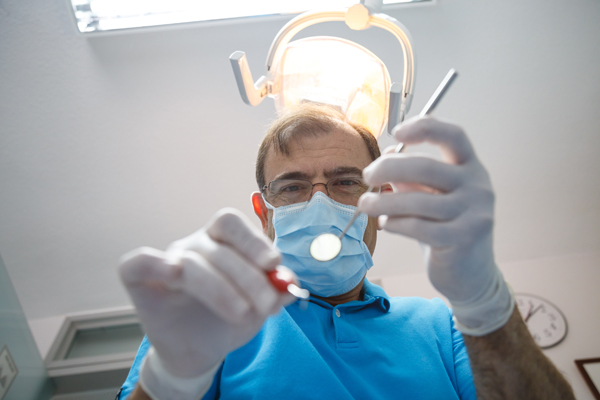
Most people experience tooth pain or sensitivity at some point. Still, an assessment from an endodontist is advisable in response to four telltale signs that indicate a possible tooth infection.
What is an endodontist?
Endodontists are dentists who have advanced training to diagnose and treat pain stemming from infection inside a tooth. These dentists frequently perform root canal procedures that involve drilling a hole through the tooth to remove the compromised pulp. Removing diseased tissue may also include making an incision in the gum and accessing it through the jawbone. A dentist may recommend endodontic treatment when an infection is pervasive or challenging to access, or does not appear on radiographic images despite producing acute symptoms.
When is it necessary to see an endodontist?
Infections within a tooth can quickly spread to other teeth, the jaw, and possibly other areas of the body. Although the early stages of bacterial tooth infections do not necessarily produce symptoms, patients and dentists should not ignore these four signs indicating the need for urgent endodontic intervention.
1. Continuous pain following root canal therapy
Root canal treatment involves clearing infection from a tooth's root chamber to save the tooth and eliminate pain. Pain that persists after cleaning a tooth's root chamber or without a visible cause on X-rays warrants a visit to an endodontist, who can locate infection concealed within the minor, often invisible, canals within the tooth's root.
2. Sudden tooth discoloration
Bacteria can enter a tooth through cracks or cavities. Teeth that suddenly appear darker or yellower than surrounding teeth without an apparent reason may be dying and require immediate attention. Root canal therapy is often enough to save a tooth, but surgery may be necessary to drain a root abscess and prevent the infection from progressing to the jawbone. Although tooth discoloration can occur without pain, patients should not ignore this sign of infection. Intense pain may occur as bacteria progress to the surrounding tissue and jawbone. At that point, saving the tooth is less likely as its support structure is compromised.
3. Blunt trauma to the face or mouth
Facial or oral trauma can chip or crack teeth or dislodge them from the sockets in the gums. Endodontic evaluation and treatment as soon as possible following an accident involving the mouth can dramatically reduce the chances of tooth loss, even if visible damage is not detectable. A thorough examination could reveal cracks or breaks below the gum line, infection of a tooth's root, or damage to neighboring teeth that could quickly spread bacteria throughout the mouth.
4. Extensive calcium deposits within a root canal
Common reasons for calcium deposits within a tooth's root chamber include trauma, aging, and prolonged decay. These deposits shrink the space within the channel, making root canal therapy challenging. However, an endodontic surgeon can reach the calcified root chamber through the gum to clear the infection.
Conclusion
An endodontist can treat severe forms of gum disease before tooth loss is inevitable. Pain does not always accompany severe dental problems, but dentists and patients can prevent complications by investigating specific concerns.
Are you considering an endodontist in the Omaha area? Get more information at https://www.advancedendotherapy.com.
Check out what others are saying about our services on Yelp: Read our Yelp reviews.
Related Posts
Having an endodontic emergency is always a cause for panic, especially if you have a dental infection. The pain alerts you to see an endodontist right away. Trauma or decay can cause dental infection. If you want to know when you should come in for a tooth infection as an endodontic emergency, here are the…
An abscessed tooth shows when you have intense tooth pain. Seeing your endodontist right away is the right thing to do. Dismissing it will only give bacteria more time to damage your tooth. The infection could spread to the surrounding tissues and teeth. If you want to understand an abscessed tooth’s symptoms and dangers, here…
Your endodontist can perform root canal therapy to maintain your natural dental structure. First, the dentist will remove the infected pulp. Next, the weakened tooth will need a replacement dental structure, which is when the tooth will get a permanent filling. If you want to know why an endodontist places a permanent filling during a…
Your endodontist may suggest endodontic microsurgery after your root canal. This can happen if your dental decay or dental trauma has resulted in deeper tissue and dental damage. In this case, non-surgical removal of the pulp is not enough anymore. You will need to go through surgery. If you want to know what endodontic microsurgery…